The State of UX in 2024: Enter late-stage UX
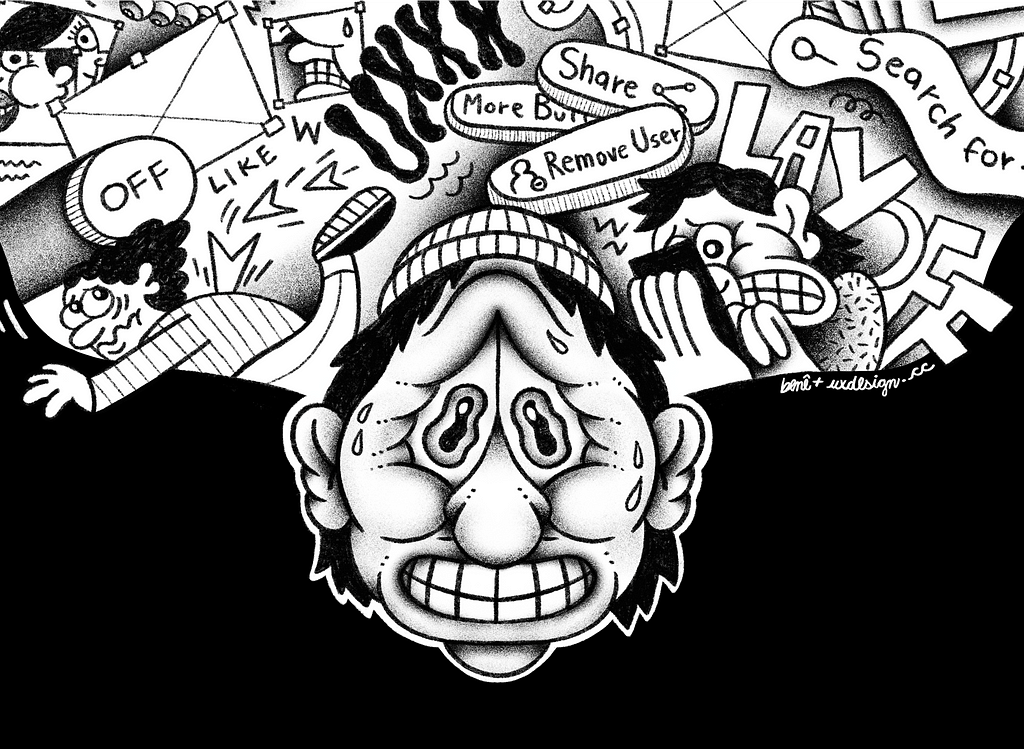
The 9th edition of The State of UX report by the UX Collective is here: a critical look at our industry based on more than 1k articles published and shared with our 500k+ subscribers in 2023.
Illustrations by Fabio Benê
Much like late-stage capitalism, late-stage UX is characterized by its market saturation, heavy focus on financial growth, commoditization, automation, and increased financialization. Corporations exert significant influence over the economy and society, and designers can only push so far when advocating for user needs. How can we navigate this landscape as designers in 2024?
The characteristics of late-stage UX, that are covered in the report:
01
Automation
AI automates an increasing part of our jobs and reduces demand for designers in certain markets.
02
Saturation
Supply of designers outstrips demand. Market is still uncertain.
03
Commoditization
Focus on scalability and standardization over differentiation and delight.
04
Financialization
Greater influence of financial health, shareholders interests, and business metrics in design decisions.
05
Disintegration
Lack of trust in digital products makes users either skeptical, complacent, or susceptible to exploitation.
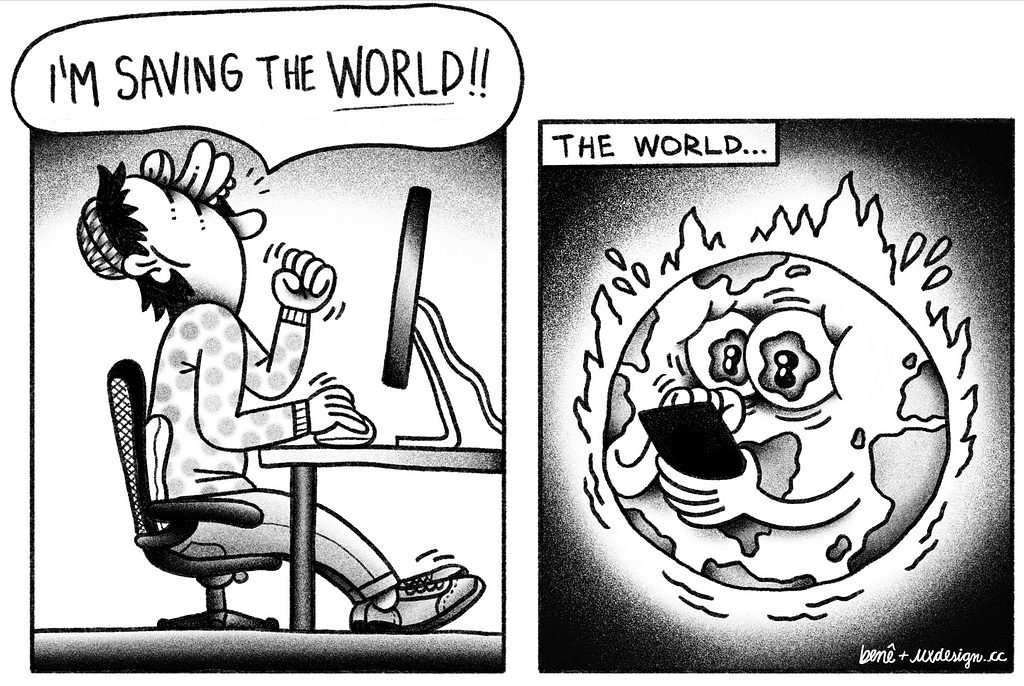
For this year’s report, we’ve had the privilege to work with Fabio Benê—a visual artist and illustrator whose style, humor, and philosophy align quite nicely with the work we do at the UX Collective.
To read the report:
While things look uncertain (as you will see in the full report linked above), as a publication that curates design-related content every week and has a good pulse on the industry, we keep being inspired by the creativity, resilience, and critical thinking coming from the design community.
We wanted to take this opportunity to highlight some of the ideas and initiatives that brought us a new perspective in 2023 and that we’ll be watching closely in 2024:
- The writing from Daley Wilhelm, Slava Polonski, PhD, Rosie Hoggmascall, Neel Dozome, Rei Inamoto, Meltem Naz Kaso Coskun, Michael McWatters, Pavel Samsonov, Darren Yeo, Elvis Hsiao, Sanna Rau, T. Robert Roeth and so many others — our most consistent writers in 2023, who have fully embraced our editorial vision of pushing the industry to think about new perspectives with every new article.
- The consistently informative and enlightening data visualizations from Pudding.Cool, an editorial platform that explains ideas debated in culture with visual essays.
- Maggie Appleton’s visual essays about programming, design, and anthropology, that have been pushing our thinking around technology and generative AI to a new level.
- Vivianne Castillo’s thought leadership, encouraging designers to think about other aspects of work beyond the craft — building an equitable, inclusive, and more humanity-centered future. “Breathe in: I am more than what I produce. Breathe out: My rest requires no apology.” (link)
- The tasteful editorial work from Rest of World, a global publication named after the term used in the West to designate “everyone else” and used by companies to lump together people and markets outside wealthy Western countries.
- Brad Frost’s talk on The End of Atomic Design and his questioning around our role as designers in the world. “We are at this really important inflection point in our species where we have to hold up a mirror and really ask: What are we doing here? What are we trying to create? (…) How do we make respectful use of our time? How do we capture our human potential, rather than just drawing the same freaking rectangle for the 25th time?”
- Halli Thorleifsson’s emotional talk at Config on how to navigate uncertainty and achieve great things in life despite adversities.
- The work of Vitaly Friedman and his incredible team at SmashingConf, the most thoughtful, well-organized, and warm design conferences we’ve been able to join in recent years — a place for thinkers and makers to share ideas and learn from one another.
- The content created by Rafael Frota, Daniel Furtado, Frederick van Amstel, Karina Tronkos, Filipe Nzongo, Kakau Fonseca, Karen Santos, Andrei Gurgel, Amyris Fernandez, Rafael Burity, Rodrigo Lemes, André Grilo, Lídia Cavalcante, Sheylla Lima, Hele Carmona, and so many others — our peers from the Brazilian UX community who, contrary to what some may say, have continuously created, published, and shared original content in Portuguese about design.
We dedicate this project to all the readers, authors, and friends of the UX Collective.
Written by: Fabricio Teixeira, Caio Braga
Illustrations by: Fabio Benê
Edited by: Emily Curtin
Narrated by: Laura Vandiver
Published by: The UX Collective (ISSN: 2766–5267) is an independent publication built to help designers think more critically about their work. You can follow our content via Email, Medium, Essays, Twitter, Linkedin. For more in-depth pieces, check our new publication DOC.

The State of UX in 2024: Enter late-stage UX was originally published in UX Collective on Medium, where people are continuing the conversation by highlighting and responding to this story.